Essential Information
Preparing for your expedition to Western Mongolia is crucial. Here is what you need to know before you take off.
Getting There
All major international flights arrive in Ulaanbaatar (UBN). From Ulaanbaatar, you'll take a domestic flight to Ulgii (ULG) — the capital of Bayan-Ulgii province, gateway to the Altai mountains. The domestic flight takes approximately 3 hours.
Our team will meet you at Ulgii airport and handle all ground transportation from there. We typically use 4x4 Toyota Land Cruisers to navigate the rugged terrain.
When to Visit
- June – September: Best for trekking, horse riding, and cultural experiences.
- October: Eagle Festival season — the famous Golden Eagle competitions.
- November – April: Snow Leopard observation season. Cold but profoundly rewarding.
What to Pack
- Layered clothing (base layer, insulating layer, waterproof shell)
- Sturdy hiking boots, broken in before the trip
- Sun protection: sunglasses, hat, sunscreen, etc.
- Personal medications
- Walking sticks
- Backpack
We send a detailed, tour-specific packing list once your booking is confirmed.
Fun Facts About Mongolia
The Golden Eagle Tradition
Kazakh Eagle Hunters (Berkutchi) have been hunting with Golden Eagles for over 6,000 years. The tradition is passed from father to son, and the bond between hunter and eagle is one of the most remarkable human-animal relationships on the planet. Each eagle is trained for 7-10 years before being released back into the wild.
257 Sunny Days
Mongolia is known as the "Land of the Eternal Blue Sky." The country averages 257 sunny days per year — more than most Mediterranean countries. Even in winter, the skies are often crystal clear, making it ideal for photography.
Tsambagarav Mountain (4,208m) is the highest peak in the region and a sacred mountain for the local Kazakh community.
Our Expeditions
Every BREATHE ALTAI expedition is designed to immerse you in the culture, wildlife, and landscapes of the Altai. Here's what makes our approach unique:
Small Groups
We keep groups small (4-8 people maximum) to minimize our impact and maximize the personal experience. This allows us to adapt the itinerary to the group's interests and pace.
Local Guides
All our guides are locals from Bayan-Ulgii. They know the mountains, the wildlife, and the communities intimately. Many have been guiding for over a decade.
Community First
We work directly with nomadic families, local musicians, and artisans. Revenue from our tours goes directly back into the local community — from supporting schools to funding conservation efforts.
The Five Sacred Peaks
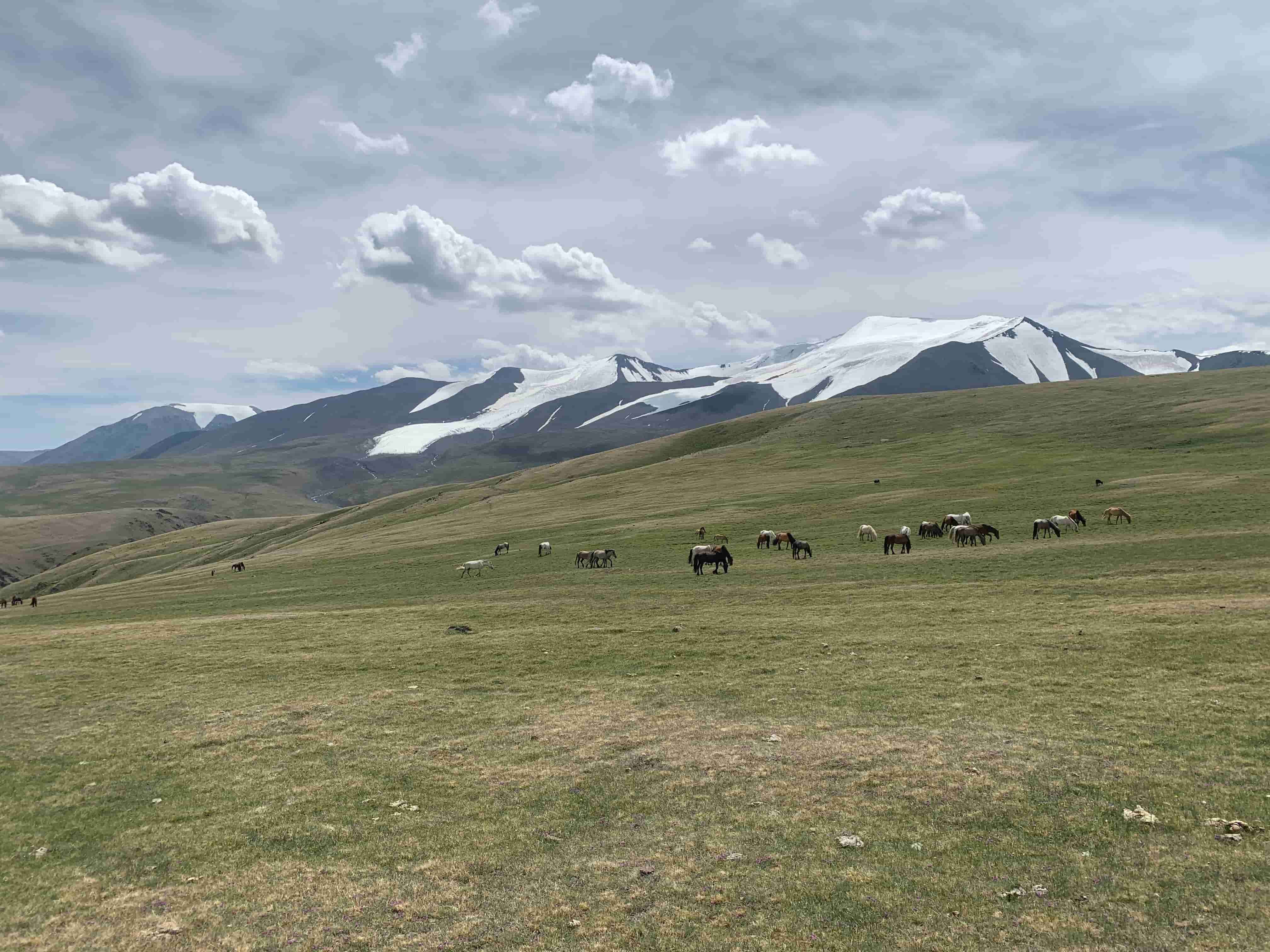
The Altai Tavan Bogd — meaning "Five Saints" — is a massif of five peaks that form the highest point in Mongolia. At 4,374 meters, Khuiten Peak towers above a landscape of glaciers, alpine meadows, and turquoise lakes untouched for millennia.
A Sacred Landscape
For the Kazakh and Tuvan peoples, these mountains are deeply sacred. Ancient petroglyphs dating back over 10,000 years have been discovered throughout the region, telling stories of hunting, ritual, and the bond between humans and the natural world. UNESCO has recognized these rock art sites as part of the Altai cultural landscape.
Glaciers of the Altai
The Potanin Glacier, stretching 14 kilometers, is the longest glacier in Mongolia. Standing at the confluence of three great water basins — the Arctic Ocean, the Pacific, and the Central Asian internal drainage — is a humbling reminder of the Altai's global significance.
The Altai Tavan Bogd National Park covers over 6,000 square kilometers and is home to argali sheep, ibex, wolves, and the elusive snow leopard.
The Ghost of the Mountains
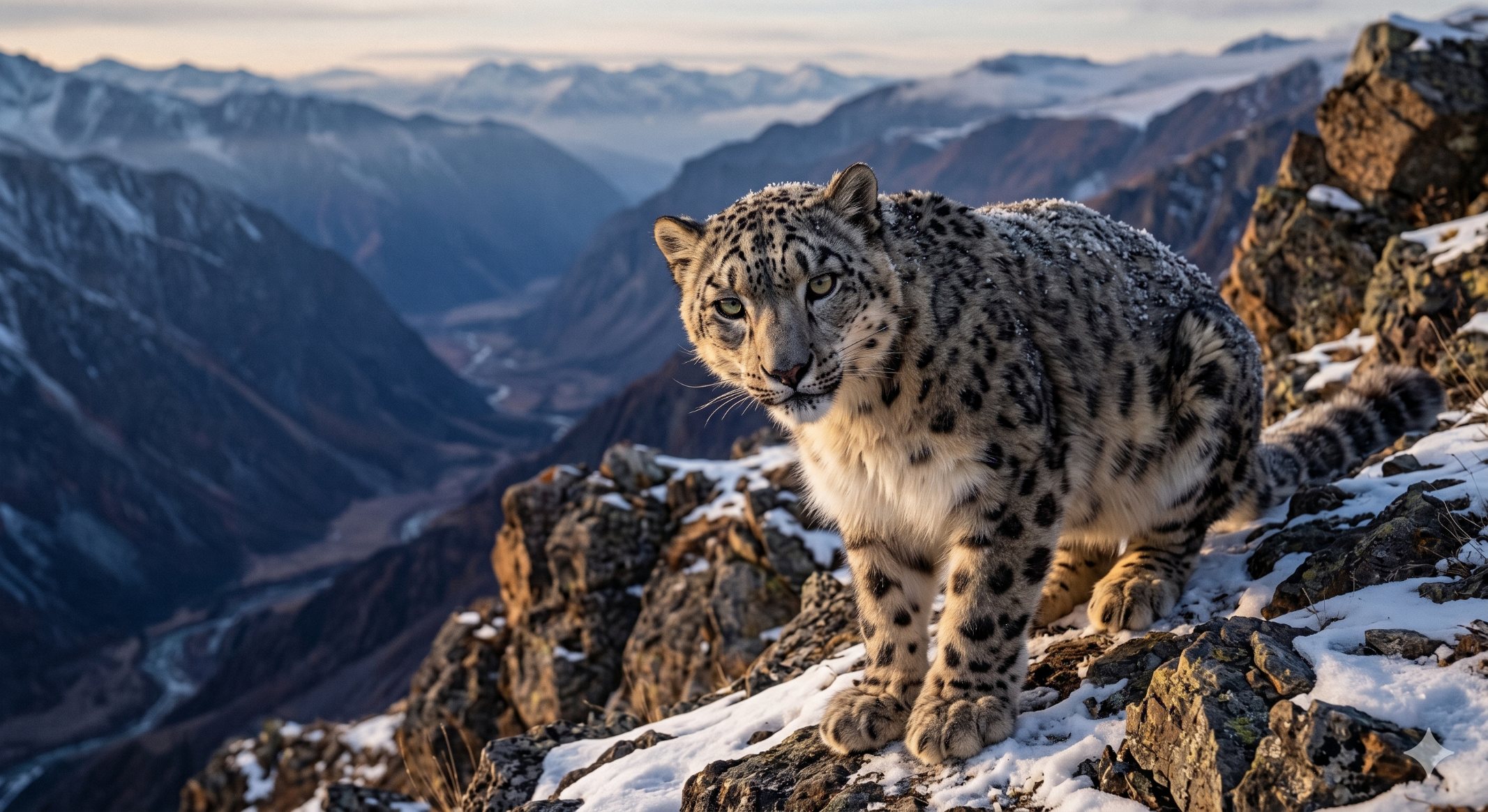
The snow leopard — known as "irbis" in the Altai — is one of the most elusive and magnificent predators on Earth. Mongolia is home to an estimated 1,000+ snow leopards, making it one of the most important strongholds for this endangered species.
Our Observation Approach
Breathe Altai's Snow Leopard Observation Tour is designed with conservation at its core. We work with local trackers who have spent decades reading the mountains — identifying pugmarks, scrapes, and scent marks that reveal the leopard's movements.
Snow leopards can leap up to 15 meters in a single bound and are perfectly adapted to temperatures as low as -40°C.
The Last Eagle Hunters
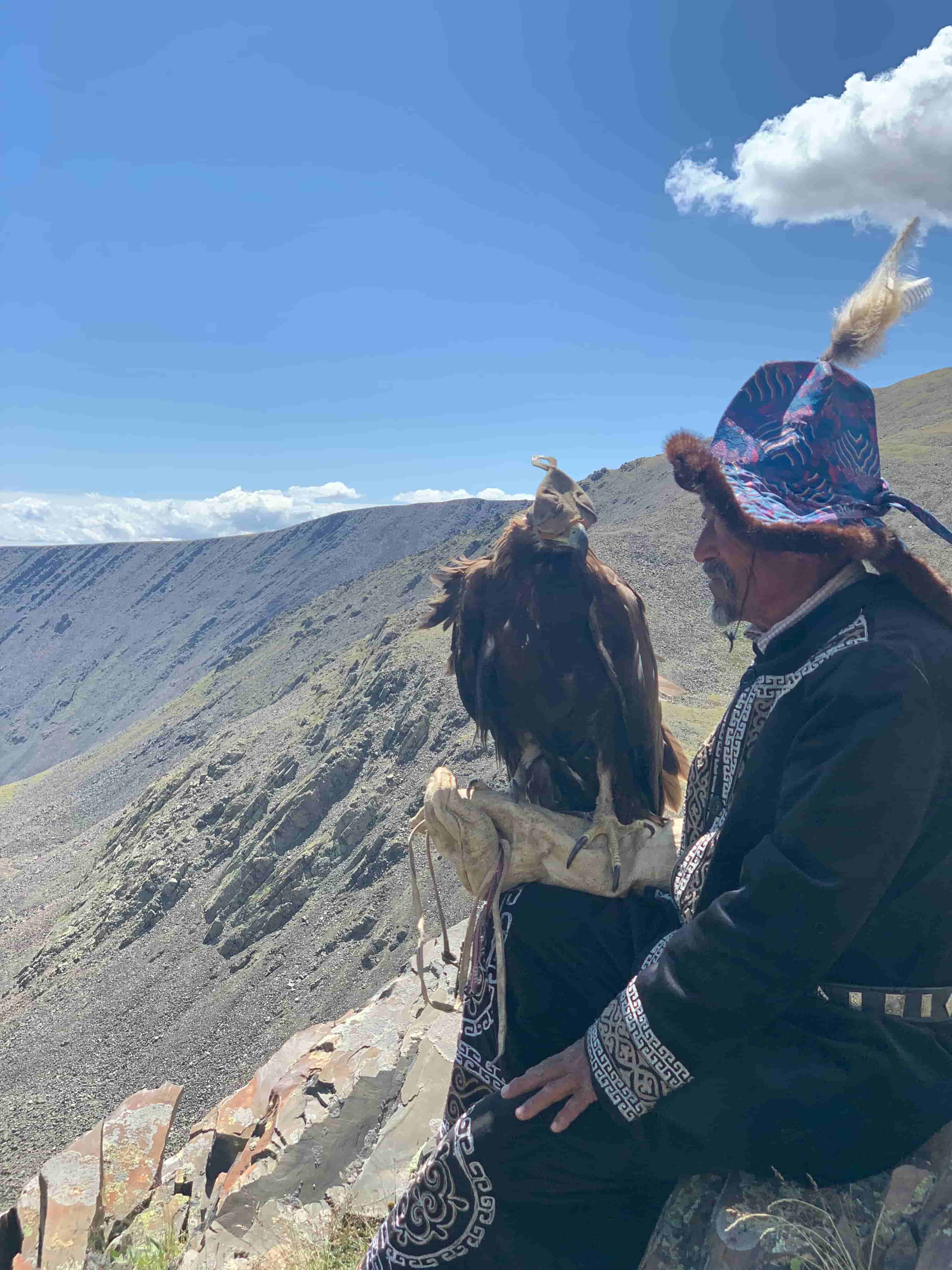
In the frozen valleys of the Mongolian Altai, a tradition older than most civilizations still lives. The Kazakh berkutchi — eagle hunters — have partnered with golden eagles for over 4,000 years. Today, fewer than 250 active practitioners remain.
The Bond Between Hunter and Eagle
A young eagle is captured from the wild at around two years old. The hunter raises the bird by hand, feeding it, speaking to it, and sleeping beside it. Over months, an unbreakable bond forms. After 7–10 years of partnership, the eagle is released back into the wild to breed.
Golden eagles have a wingspan of up to 2.3 meters and can spot prey from over 3 kilometers away.
Nomadic Hospitality
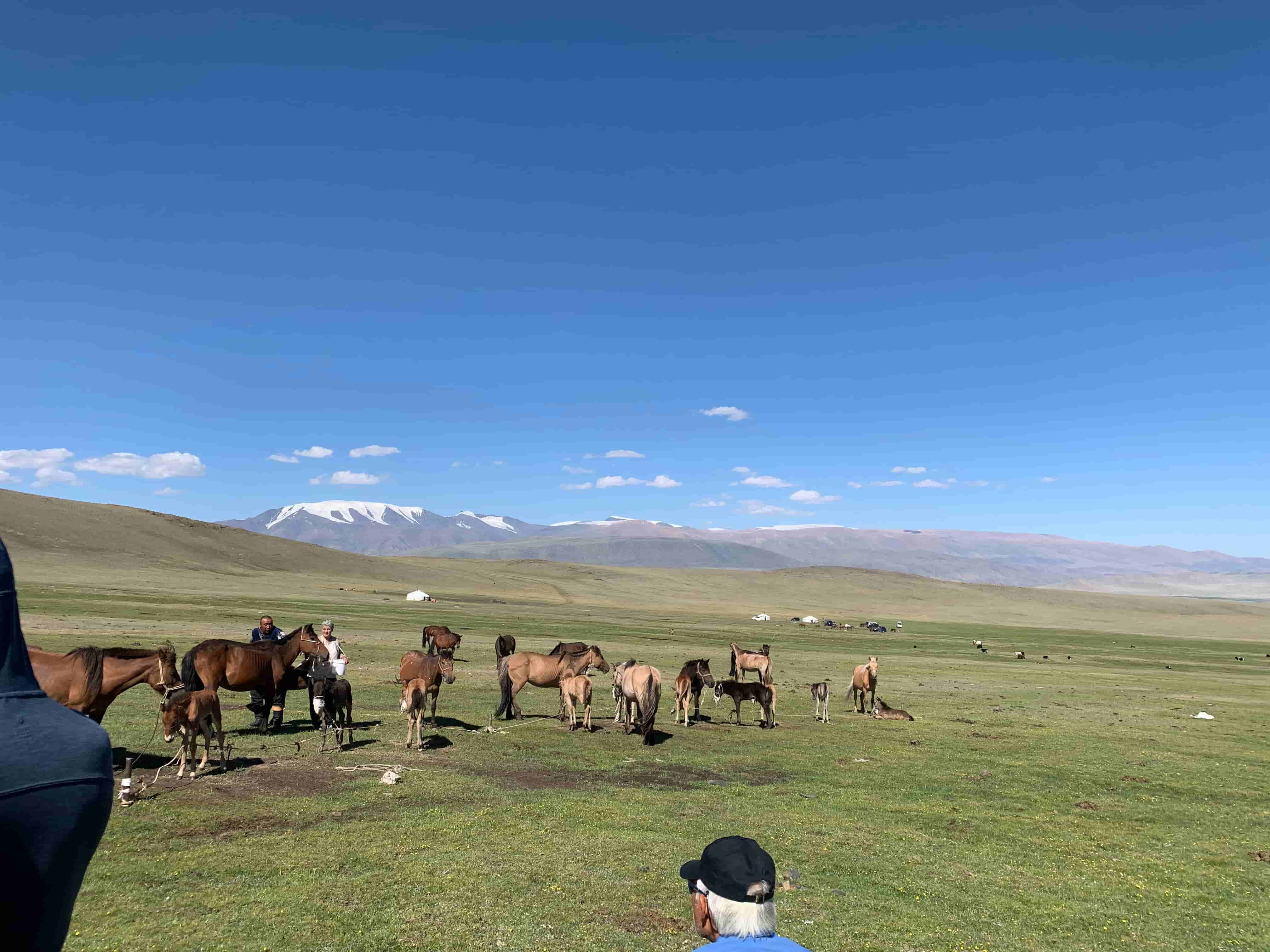
In a world of permanent addresses and digital connectivity, the nomads of the Altai still live by the rhythm of seasons. Families move 2–4 times per year, following their herds across vast grasslands and mountain passes.
Life in the Ger
The Mongolian ger (yurt) is a masterpiece of portable architecture. It can be assembled in under two hours, yet withstands winds of over 100 km/h and temperatures of -40°C. Every ger follows the same layout — the door always faces south, and guests are always seated in the place of honor at the north end.
Mongolia has approximately 500,000 nomadic and semi-nomadic herders — roughly 15% of the total population.
The Land of the Eternal Blue Sky
Mongolia averages over 260 sunny days per year — more than most Mediterranean countries. In the Altai region, this translates to extraordinary conditions for photography, stargazing, and simply being outdoors.
Stargazing in the Altai
With virtually zero light pollution, the Altai Mountains offer some of the best stargazing on the planet. The Milky Way stretches overhead in vivid detail, and on clear winter nights, the aurora borealis occasionally shimmers at the northern horizon.
The Altai region receives an average of 2,600 hours of sunshine per year. For comparison, London receives about 1,500 hours.